
Neurofeedback
Is Neurofeedback Legitimate? Evidence and Limitations
Feb 7, 2026
Examine how neurofeedback works, what controlled studies show, and the questions that help distinguish responsible practice from unsupported promises.
Learning to control your brain's electrical activity through real-time feedback. Train specific frequencies at specific locations—reduce theta for attention, increase alpha for relaxation, strengthen SMR for impulse control.
61 items
Learning to control your brain's electrical activity through real-time feedback. Train specific frequencies at specific locations—reduce theta for attention, increase alpha for relaxation, strengthen SMR for impulse control.
Examine how neurofeedback works, what controlled studies show, and the questions that help distinguish responsible practice from unsupported promises.
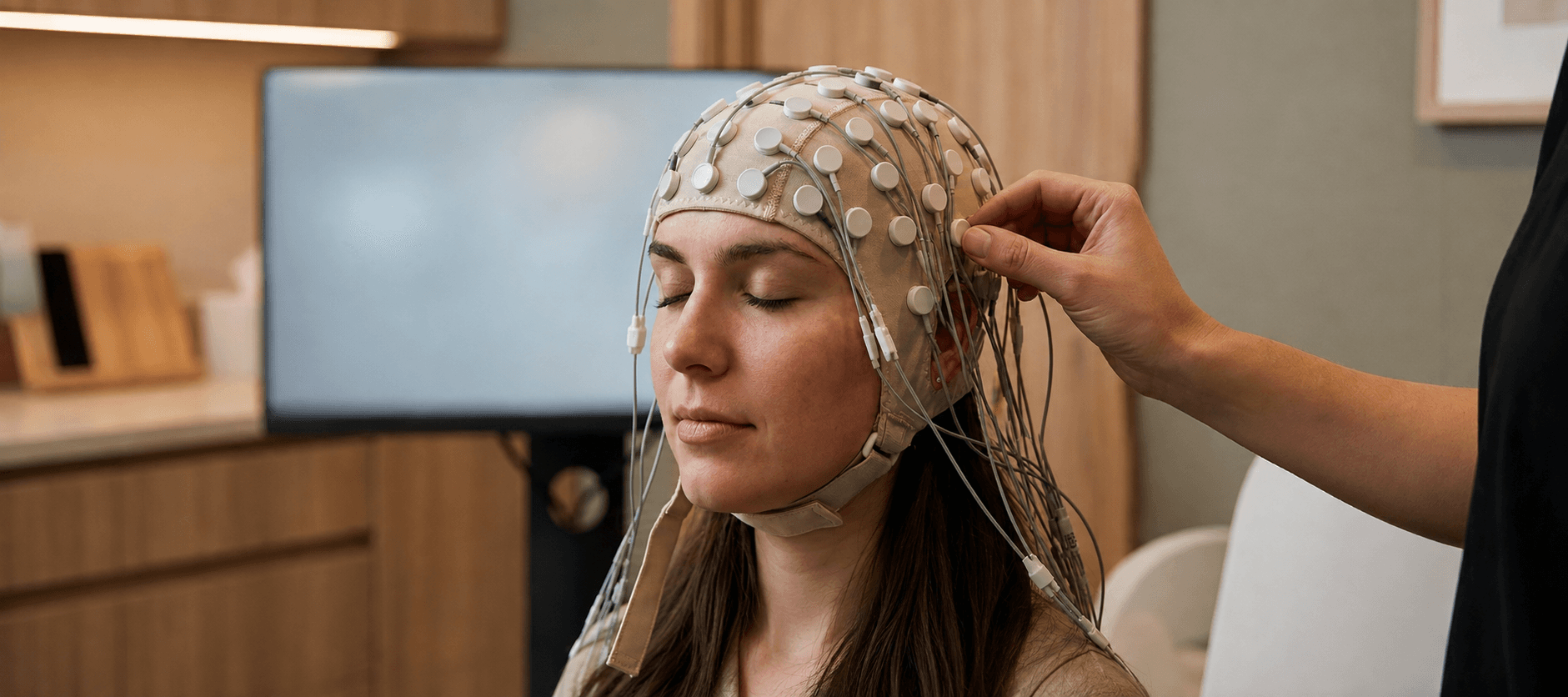
How quantitative EEG is recorded and interpreted, what affects the results, and the limits of using a brain map to explain symptoms or select training.
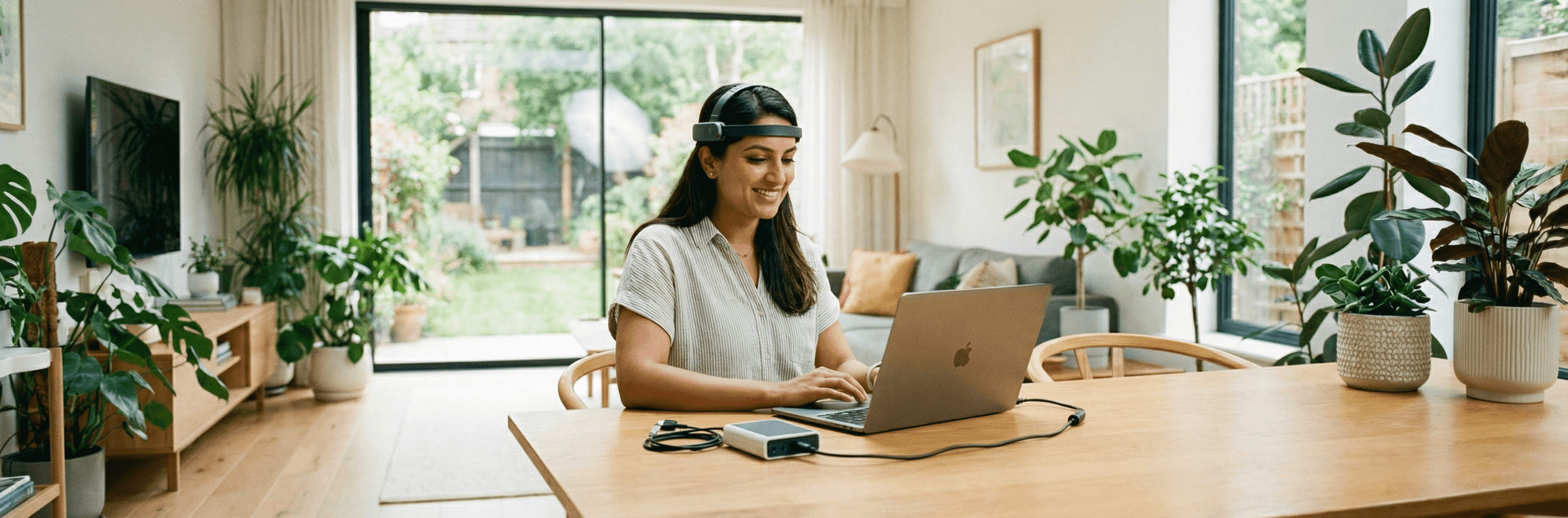
Understand home neurofeedback equipment, supervision, recording quality and practical commitments before deciding whether remote training suits you.
What alpha rhythms measure, how their meaning changes with attention and recording state, and what alpha neurofeedback studies suggest about memory.

What recurring EEG patterns describe, how recording conditions affect them, and why a brain map needs context before it guides training.

How threat learning, attention and bodily arousal interact in anxiety, with a clear account of established care and emerging brain-training research.
Live Q&A sessions from Neurofeedback & Chill where Dr. Hill demonstrates protocols, answers viewer questions, and explores eeg training applications in real-time with QEEG examples and brain training discussions.

Your brain's blood vessels aren't passive pipes—they're rhythmic oscillators. Every 10 seconds, tiny arteries in your cortex squeeze and relax in coordinated waves. This is vasomotion, and three breakthrough 2024 papers just revealed something remarkable: these vascular oscillations are plastic, trainable, and functionally important for waste clearance and brain health. For 25 years, I've used a simple neurofeedback tool called passive infrared HEG (hemoencephalography) that measures prefrontal blood flow via thermal radiation. People train their blood flow up, and migraines decrease, attention improves, anxiety drops. But the mechanism was always vague—"training neurovascular coupling" or "increasing prefrontal activation." These new papers give us a sharper model. When you train with HEG, you're likely training the flexibility and coherence of vasomotion—teaching vascular oscillators to respond more smoothly to neural demand and potentially improving waste clearance through the glymphatic system. **Key findings from 2024 research:** • Vasomotion forms traveling waves across cortex that dominate resting perfusion (Broggini et al., *Neuron*) • Vascular oscillations are plastic and entrainable—repeated stimulation improves waste clearance (Sasaki et al., *eLife*) • After stroke, vessels lose their rhythm; restoring vasomotion may be neuroprotective (Zhao et al.) **The training hypothesis:** HEG neurofeedback uses repeated, spaced trials (up-regulate prefrontal blood flow, get feedback, rest, repeat). This is structurally identical to the entrainment protocols shown to train vasomotion in animal models. Over 10-20 sessions, you're teaching the prefrontal vascular network to oscillate more coherently and respond more efficiently. **Clinical data:** Multiple studies show HEG reduces migraine frequency/severity, improves attention and executive function, and decreases anxiety and depression. The evidence is solid. What's new is understanding *why*—we're training the rhythmic, plastic dynamics of the cerebrovascular system. This connects to my previous video on cognitive cadence: the 10-second vasomotion rhythm is one of the nested timescales that keeps your brain functioning. Lose the rhythm (chronic stress kills the pacemaker neurons), and cognition degrades. Train the rhythm, and function improves. **Primary sources:** Broggini et al. (2024) - *Neuron* - Traveling waves of vasomotion Sasaki et al. (2024) - *eLife* - Plastic vasomotion entrainment Zhao et al. (2024) - Vasomotion dysfunction after stroke Turner et al. (2025) - *eLife* - nNOS neurons as vascular pacemakers **Clinical HEG references:** Carmen (2004), Stokes & Lappin (2010), Walker & Lyle (2016), Dias et al. (2012), Baker (2023) --- ## Tags vasomotion, HEG neurofeedback, hemoencephalography, cerebral blood flow, brain waves, neurovascular coupling, glymphatic system, brain optimization, migraine treatment, ADHD, neurofeedback, biofeedback, prefrontal cortex, vascular plasticity, neuroprotection, cognitive neuroscience, functional neuroimaging, waste clearance, chronic stress Live Q&A as always. ⏰ Live at 6pm Pacific 👉 Prerelease book interest: https://andrewhillphd.com/gifted-and-tortured-book-pre-release-interest/ 👉 *Black Friday / Cyber Monday* QEEG & Neurofeedback Specials :https://www.peakbrain.global/black-friday 👉 *Book a free consult call:* https://calendly.com/drhill1 This is an interactive stream—bring your questions about brain patterns, neurofeedback, phenotypes, or anything brain-related. Whether you're new to neuroscience or a seasoned biohacker, all levels welcome!

Your brain operates on nested rhythms—500ms reset waves, 10-second vascular cycles, and forced maintenance windows when you skip sleep. New 2025 research reveals how stress and sleep deprivation don't just make you tired—they destroy the rare neurons that keep these rhythms alive. ⏰ Live at 6pm Pacific 👉 *Black Friday* QEEG & Neurofeedback Specials :https://www.peakbrain.global/black-friday 👉 *Book a free consult call:* https://calendly.com/drhill1 This is an interactive stream—bring your questions about brain patterns, neurofeedback, phenotypes, or anything brain-related. Whether you're new to neuroscience or a seasoned biohacker, all levels welcome! In this video: Three breakthrough papers mapped this at three timescales: • 500 milliseconds — Rotating waves reset your PFC after distraction. This is why "multitasking" is impossible—every context switch costs you half a second minimum. • 10 seconds — Rare nNOS neurons drive vascular oscillations that deliver O2 and clear waste. Chronic stress kills these cells. • 2-5 minutes — When sleep-deprived, your brain hijacks waking moments for forced maintenance. You're offline for 15 seconds while CSF flushes your brain. **Key insight:** You can't think and clean simultaneously. Healthy cognition requires rhythmic alternation. Disrupt the rhythm (stress, sleep deprivation, multitasking) and the system collapses: errors accumulate, forced lapses intrude, pacemaker neurons die. **Primary sources:** Batabyal et al. (2025) - Journal of Cognitive Neuroscience - https://doi.org/10.1162/JOCN.a.2410 Turner et al. (2025) - eLife - https://doi.org/10.7554/eLife.105649.3 Yang et al. (2025) - Nature Neuroscience - https://doi.org/10.1038/s41593-025-02098-8 ## Tags cognitive neuroscience, brain rhythms, multitasking myth, task switching, sleep deprivation, stress and brain, vasomotion, glymphatic system, prefrontal cortex, cognitive performance, nNOS neurons, traveling waves, neurodegeneration, biohacking, brain optimization

Welcome to this week's Neurofeedback & Chill, where I'm hosting an open Q&A session on all things neurofeedback, biohacking, and health optimization! ✨ Bring Your Questions About: - Neurofeedback technology and applications - Brain training protocols for specific goals - Biohacking tools and techniques - Health optimization strategies - Integrating multiple approaches for peak performance - Scientific research behind these methods - Getting started with brain training 💡 Whether you're new to neurofeedback or an experienced biohacker, this session is for you! I'll be answering questions live and diving deep into the science and practical applications of these powerful approaches. 📅 When: Tonight at 6 PM Pacific 📌 Subscribe and hit the notification bell so you don't miss future episodes! Can't make it live? Drop your questions in the comments, and I'll try to address them during the stream or later one. The replay will be available afterward. #Neurofeedback #Biohacking #BrainTraining #HealthOptimization #AMA #BrainHealth #PerformanceOptimization #CognitiveEnhancement #MentalPerformance #StressReduction #SleepOptimization #FocusImprovement #NeuralRegulation #NeuroplasticityTraining #BrainWaves #EEGTraining #PeakPerformance 💬 Drop your questions in the comments—let's explore brain health together! 👉 Watch LIVE: Mondays 6pm Pacific 📺 YouTube.com/DrHill 👉 Ready to optimize your brain? https://peakbraininstitute.com/brain-training/neurofeedback/ 👉 Book a consult: https://calendly.com/drhill1 👉 Book a discount QEEG: https://peakbraininstitute.com/special/

👉 Book a free consult call: https://calendly.com/drhill1 Where is that sound coming from?? Tinnitus, Misophonia, & Earworms In this episode, we explore how the brain creates (and sometimes traps) sounds that aren’t really “there.” We’ll look at how QEEG reveals auditory and non-auditory cortical patterns linked to these phenomena, what they have in common, and how neurofeedback can help quiet the noise. ⸻ 🎥 What’s inside this video: • QEEG patterns behind tinnitus, earworms, and sound sensitivity • Why auditory cortex isn’t the only culprit — limbic and default mode network areas may matter too • How stress and attention loops feed phantom sounds • What differentiates earworms (musical replay) from tinnitus (tone) and misophonia (aversive response) • How neurofeedback targets the brain’s “gain” control on these featuers ⸻ 🧠 Key Takeaways: • “Phantom” sounds often reflect overactive prediction and sensory integration networks, not ear damage. • Misophonia and tinnitus share emotional-cortical hypercoupling patterns — the brain’s alarm system reacts to sound. • QEEG-guided neurofeedback can calm hyperreactivity in temporal and limbic circuits. • Auditory relief often emerges when the whole sensory regulation system improves. ⸻ 💬 Questions to consider: • Do certain sounds feel unbearable or stick in your head? • Have you noticed tinnitus change with stress or fatigue? • What’s helped you “turn down” internal noise — mindfulness, sleep, or sound therapy? Share your experience in the comments — I may feature it in a future episode on sensory integration and emotional regulation. ⸻ 📅 Live 6 PM Pacific Mondays Subscribe and hit the bell 🔔 for weekly science-backed brain updates. ⸻ 🧠 RESOURCES 👉 Book a free consult: https://calendly.com/drhill1 👉 $250 off QEEG Brain Mapping: https://peakbraininstitute.com/special/ ⸻ Relevant Topics: tinnitus, misophonia, earworms, neurofeedback, QEEG, auditory cortex, limbic system, brain training, brain mapping, plasticity, sound sensitivity, auditory hallucinations, emotional regulation, sensory processing Tags: #Neurofeedback #Tinnitus #QEEG #BrainTraining #Neuroplasticity #PeakBrain #Misophonia #Earworms #BrainOptimization

👉 Book a free consult call: https://calendly.com/drhill1 What makes neurofeedback work better—or worse? In this episode, we break down the critical factors that enhance or interfere with neurofeedback training. From supplements and medications to sleep, stress, and brain-state stacking, we’ll explore how to optimize plasticity—and how to avoid pitfalls that can derail your results. ⸻ 🎥 What’s inside this video: • Training frequency & intensity – Why more isn’t always better • Sleep – The most underappreciated neurofeedback enhancer • Supplements & Medications – What get stronger vs. what may blunt effects (like benzos or stimulants) • Plasticity stackers – Meditation, movement, and other practices that boost outcomes • Cautionary combos – What to know when combining NFB with things like general anesthesia, TMS, psychedelics, or HBOT • Poor communication & tracking – How lack of clarity between clients and clinicians sabotages progress • When symptoms worsen – Why some side effects are part of learning—and when to pause or reassess ⸻ 🧠 Key Takeaways: • Neurofeedback works best when the brain is well-resourced: rested, supported, and stable. • Synergistic tools like meditation can boost neuroplasticity, while conflicting inputs (e.g., meds or major interventions) need to be carefully timed. • Clear communication and proper tracking are essential—especially in remote or unsupervised settings. • Training through side effects without adjusting protocols may hinder long-term progress. ⸻ 💬 Questions to consider: • What changes have you noticed during neurofeedback—good or bad? • Do you stack NFB with anything else, like breathwork, sauna, or nootropics? • Have you ever had a session backfire—or something else amplify the effects? Share your experience in the comments below—I read them all and may feature them in a future episode on designing effective brain training stacks. ⸻ 📅 Live 6 PM Pacific Mondays Subscribe and hit the bell 🔔 for weekly science-backed brain updates. ⸻ 🧠 RESOURCES 👉 Book a free consult: https://calendly.com/drhill1 👉 $250 off QEEG Brain Mapping: https://peakbraininstitute.com/special/ ⸻ Relevant Topics: neurofeedback, QEEG, brain training, brain mapping, plasticity, brain optimization, stacking, sleep, supplements, EEG, meditation, NAD, TMS, general anesthesia, HBOT, side effects, clinical outcomes Tags: #Neurofeedback #BrainTraining #Biohacking #Neuroplasticity #BrainOptimization #QEEG #PeakBrain

👉Book a free consult call: https://calendly.com/drhill1 A new UC Irvine paper reports that nicotinamide (vitamin B3) + EGCG (green tea catechin) restored neuronal GTP and mobilized endocytosis/lysosomal autophagy—clearing intraneuronal Aβ aggregates in aged/AD‑model neurons after just 24 hours in vitro. Today I’ll translate that mechanism (GTP → Rab7/Arl8b vesicle traffic) for humans, then triangulate it with human NAD‑axis data—including NR brain MRS studies and a Phase 2a AD trial of high‑dose nicotinamide—to build a realistic framework for what might (and might not) generalize from dish/mouse to people Key human anchors we’ll use: • NR raises brain NAD in humans: ^31P‑MRS in Parkinson’s (NADPARK, 1 g/day, 30 days) and downfield ^1H‑MRS in healthy volunteers (single 900 mg dose).  • High‑dose nicotinamide in early AD (NEAT): safe, no significant CSF p‑Tau231 reduction at 48 weeks (3 g/day); PK/PD shows heavy methylation to MeNAM and CSF NAM quantifiable in only ~32%—a big translational clue.   • Older adults crossover trial: oral NR (1 g/day for 6 weeks) increased NAD in neuron‑enriched extracellular vesicles and reduced NEV Aβ42—biomarkers plausibly linked to brain processes.  • BBB & transport: Equilibrative nucleoside transporters (ENTs) at the brain endothelium are a plausible entry route for ribosides; ENT2 has been functionally implicated in BBB transport.  • EGCG safety: EFSA’s 2018 evaluation and the UK COT (2024) update caution about hepatotoxicity at high supplemental doses, with ≤800 mg/day EGCG generally considered the upper bound without signal in supervised settings.   Key takeaways (for sophisticated viewers) • Mechanism: The UCI work spotlights neuronal GTP availability as a rate‑limiter for vesicle trafficking/autophagy; NAM + EGCG rescued GTP and “clearing” pathways in vitro—a different lever than classic ATP narratives.  • Translation hinge: In humans, raising brain NAD is feasible (NR studies), but turning that into sustained neuronal mtGTP and higher Rab7/Arl8b traffic is unproven; any effect likely depends on exposure profile at the BBB and in neurons, not just total daily dose.  • NAM vs. NR: NEAT shows safe 3 g/day NAM but no primary biomarker win and significant methylation to MeNAM with low/variable CSF NAM—suggesting delivery & metabolism, not target biology per se, may be the bottleneck.   • Safety reality: For EGCG, tea intake is different from high‑dose extracts; regulatory reviews keep ≤800 mg/day EGCG as a practical ceiling for supplemental use, with idiosyncratic hepatotoxicity risk above that. This video is not medical advice.   REFERENCES (live links) UCI press release on GeroScience paper (Aug 6, 2025): https://news.uci.edu/2025/08/06/uc-irvine-researchers-find-combination-of-natural-compounds-for-brain-cleaning/ Santana et al., GeroScience (2025) – NAM + EGCG restore neuronal GTP & autophagy: https://pubmed.ncbi.nlm.nih.gov/40751793/ https://link.springer.com/article/10.1007/s11357-025-01786-4 Grill et al., NEAT Phase 2a (Neurology, 2025) – Nicotinamide 3 g/day in early AD: https://pubmed.ncbi.nlm.nih.gov/39671543/ Ketron et al., PK/PD from NEAT (Alzheimer’s Research & Therapy, 2025) – CSF NAM & MeNAM: https://pmc.ncbi.nlm.nih.gov/articles/PMC11895359/ Brakedal et al., NADPARK (Cell Metabolism, 2022) – NR raises brain NAD by 31P‑MRS: https://pubmed.ncbi.nlm.nih.gov/35235774/ Nanga et al., MRM (2024) – Acute 900 mg NR raises human brain NAD by DF‑1H MRS: https://pubmed.ncbi.nlm.nih.gov/39044608/ Vreones et al., Aging Cell (2023) – NR in older adults: ↑NEV NAD, ↓NEV Aβ42: https://pmc.ncbi.nlm.nih.gov/articles/PMC9835564/ Rab7/Arl8b in late endosome–lysosome traffic: https://pmc.ncbi.nlm.nih.gov/articles/PMC5040976/ https://www.nature.com/articles/s41467-024-44957-1 TCA cycle GTP step (SCS): https://www.jbc.org/article/S0021-9258(22)01281-9/fulltext ENT2 and BBB transport: https://pmc.ncbi.nlm.nih.gov/articles/PMC8410084/ EGCG safety – EFSA opinion (2018) & UK COT statement (2024): https://pmc.ncbi.nlm.nih.gov/articles/PMC7009618/ https://cot.food.gov.uk/sites/default/files/2024-11/COT%2008.2024%20-%20Statement%20on%20the%20hepatotoxicity%20of%20green%20tea%20catechins_Lay%20summary_FINAL%20%28003%29.pdf -- Note: Educational only. Not medical advice. If this is helpful, please like, subscribe, and share. Questions? Drop them in the comments—I read them all. ⏰ Live 6 PM Pacific Mondays Subscribe and hit the bell for weekly brain health updates! 🧠 RESOURCES 🧠 👉Book a free consult call: https://calendly.com/drhill1 👉$250 off QEEG Brain Mapping at Peak Brain: https://peakbraininstitute.com/special/ 💡Whether you're a biohacking enthusiast, longevity seeker, or just curious about optimizing your health, this episode packs actionable insights backed by the latest research . #NAD #Nicotinamide #NR #EGCG #Alzheimers #Parkinsons #Autophagy #MRS #BrainHealth #Neuroscience

👉Book a free consult call: https://calendly.com/drhill1 Join me for another relaxed weekly session where we dive into all things neurofeedback, brainwaves, and optimization! Tonight we're keeping it chill and going with the flow. What we might cover: - 1 vs 2 ch training - Sequencing segments of training - Sum vs. Dual, when doing 2 channel training (EEGer) - Live EEGer Neurofeedback session This is an interactive stream - bring your questions about brainwaves, neurofeedback, or anything brain-related. Whether you're new to neurofeedback or a seasoned practitioner, all levels welcome! ⏰ Live at 6 PM Pacific Drop your questions in the chat and let's explore the fascinating world of neuroscience together. Perfect background viewing while you wind down your day. #Neurofeedback #Brainwaves #QEEG #Biohacking #Neuroscience #LiveStream #BrainOptimization 🔴 LIVE EVERY MONDAY 6PM PT Subscribe and hit the bell for weekly brain health updates! CONNECT: 💬 Chat with us live during the stream 📧 Questions? Drop them in the comments 🔔 Turn on notifications for upcoming streams 🧠 RESOURCES 🧠 👉Book a free consult call: https://calendly.com/drhill1 👉$250 off QEEG Brain Mapping at Peak Brain: https://peakbraininstitute.com/special/ 💡Whether you're a biohacking enthusiast, longevity seeker, or just curious about optimizing your health, this episode packs actionable insights backed by the latest research . neurofeedback, brain health, anti-aging, meditation, biological age, cognitive decline, longevity, brain training, EEG, mindfulness, digital technology seniors, music therapy, nature therapy, Harvard meditation study, neuroscience, brain optimization, live stream, Dr Hill, chill stream, relaxing educational content, 2025 research, cognitive function, memory improvement, stress reduction, healthy aging

👉Book a free consult call: https://calendly.com/drhill1 Join me for another relaxed weekly session where we dive into all things neurofeedback, brainwaves, and optimization! Tonight we're keeping it chill and going with the flow. What we might cover: - QEEG brain mapping insights - Neurofeedback tips and techniques - Biohacking strategies for better brain health - ADHD, aging, and neuroscience Q&A - Your questions and topics! This is an interactive stream - bring your questions about brainwaves, neurofeedback, or anything brain-related. Whether you're new to neurofeedback or a seasoned practitioner, all levels welcome! ⏰ Live at 6 PM Pacific Drop your questions in the chat and let's explore the fascinating world of neuroscience together. Perfect background viewing while you wind down your day. #Neurofeedback #Brainwaves #QEEG #Biohacking #Neuroscience #LiveStream #BrainOptimization 🔴 LIVE EVERY MONDAY 6PM PT Subscribe and hit the bell for weekly brain health updates! CONNECT: 💬 Chat with us live during the stream 📧 Questions? Drop them in the comments 🔔 Turn on notifications for upcoming streams 🧠 RESOURCES 🧠 👉Book a free consult call: https://calendly.com/drhill1 👉$250 off QEEG Brain Mapping at Peak Brain: https://peakbraininstitute.com/special/ 💡Whether you're a biohacking enthusiast, longevity seeker, or just curious about optimizing your health, this episode packs actionable insights backed by the latest research . neurofeedback, brain health, anti-aging, meditation, biological age, cognitive decline, longevity, brain training, EEG, mindfulness, digital technology seniors, music therapy, nature therapy, Harvard meditation study, neuroscience, brain optimization, live stream, Dr Hill, chill stream, relaxing educational content, 2025 research, cognitive function, memory improvement, stress reduction, healthy aging

Get QEEG Special: https://peakbraininstitute.com/special/ Book free discovery call: https://calendly.com/drhill1 Join Discord Neurofeedback server: https://discord.gg/244cJFft Read Neurofeedback Subreddit https://www.reddit.com/r/Neurofeedback/ Join us for this week's Neurofeedback & Chill livestream to explore Alpha brainwaves—your brain's natural "idling rhythm"—and their crucial role in anxiety, relaxation, and addiction recovery. In this episode, we'll dive into: • How Alpha rhythms function as an idling mechanism, keeping the brain calm yet ready. • What happens when Alpha regulation goes awry, especially in conditions like alcoholism and anxiety. • Alpha/Theta neurofeedback—why it works, when it's beneficial, . • When NOT to train Alpha We'll also discuss practical strategies for re-regulating Alpha rhythms. Whether you're navigating anxiety, supporting addiction recovery, or simply curious about brain training, this livestream will provide actionable insights backed by neuroscience. 🔴 LIVE every Monday at 6pm PT 🧠 Learn more about neurofeedback training 💬 Bring your questions for our Q&A segment 🧠 RESOURCES 🧠 👉Book a free consult call: https://calendly.com/drhill1 👉$250 off QEEG Brain Mapping at Peak Brain: https://peakbraininstitute.com/special/ #neurofeedback, #brainhealth #EEG #BetaPower #Neuroplasticity #braintraining #biohackingtips #alphawaves

Get QEEG Special: https://peakbraininstitute.com/special/ Book free discovery call: https://calendly.com/drhill1 Join Discord Neurofeedback server: https://discord.gg/244cJFft Read Neurofeedback Subreddit https://www.reddit.com/r/Neurofeedback/ Join us for this livestream to chat about Downtraining - a technique used in classic neurofeedback that can be used a bit differently than standard amplitude training. In this video, we chat about the general ideas around Downtraining, and then look at a research finding -a fascinating new study published in Communications Biology that explores how changing brainwave activity (specifically, beta power: 13–30 Hz) through EEG neurofeedback impacts motor performance. Is motor cortical beta activity more about enhancing raw strength and speed (“vigor”), or does it help the brain adapt flexibly to changing demands? The study reveals surprising insights: • Reducing beta waves can help you perform better—whether that means speeding up or slowing down your movements, depending on what’s needed. • Increasing beta waves may stabilize existing motor patterns, sometimes at the expense of adaptability. • These findings challenge older views that linked beta power solely to motor force or speed. Dive into the science behind motor flexibility, neurofeedback, and how our brain adapts to different motor tasks. Whether you’re into sports, neurofeedback, neuroscience, or motor rehabilitation, understanding beta brainwaves could change the way you think about movement and brain training. 📖 Original Study: Pierrieau, E., et al. (2025). Changes in cortical beta power predict motor control flexibility, not vigor. Communications Biology, 8(1041). https://doi.org/10.1038/s42003-025-08465-2 🔴 LIVE every Monday at 6pm PT 🧠 Learn more about neurofeedback training 💬 Bring your questions for our Q&A segment 🧠 RESOURCES 🧠 👉Book a free consult call: https://calendly.com/drhill1 👉$250 off QEEG Brain Mapping at Peak Brain: https://peakbraininstitute.com/special/ #neurofeedback, #brainhealth #EEG #BetaPower #Neuroplasticity #braintraining #biohackingtips

Get QEEG Special: https://peakbraininstitute.com/special/ Book free discovery call: https://calendly.com/drhill1 Join Discord Neurofeedback server: https://discord.gg/244cJFft Read Neurofeedback Subreddit https://www.reddit.com/r/Neurofeedback/ Is AI rewiring your brain? New research from MIT, UCLA, and Microsoft reveals how using ChatGPT, Google, and AI assistants is literally changing our neural patterns, memory, and creativity. From brain scans showing reduced activity during AI use to studies proving "digital amnesia," this video breaks down what science actually knows about your brain on AI. 🧠 What You'll Learn: - Why AI voices trigger different brain regions than human voices - How ChatGPT reduces brain activity by up to 50% (MIT study) - The "cognitive hangover" effect of prolonged AI use - Why AI users score lower on creativity and critical thinking tests - Evidence-based strategies to use AI without losing cognitive abilities 📄 Internet & Brain (Google Era, UCLA) • Your Brain on Google (UCLA fMRI study, 2009) https://pubmed.ncbi.nlm.nih.gov/19155745/ 🤖 AI & Brain Studies (AI Era, MIT) • Your Brain on ChatGPT: EEG and cognitive offloading study (MIT Media Lab, 2025) Preprint: https://arxiv.org/abs/2506.08872 MIT overview: https://www.media.mit.edu/publications/your-brain-on-chatgpt/overview/ ResearchGate PDF: https://www.researchgate.net/publication/392560878_Your_Brain_on_ChatGPT_Accumulation_of_Cognitive_Debt_when_Using_an_AI_Assistant_for_Essay_Writing_Task • Effects of AI-driven chatbot feedback on learning outcomes (Yin et al., npj Science of Learning, 2025) https://www.nature.com/articles/s41539-025-00311-8 • MIT EEG study reported in TIME https://time.com/7295195/ai-chatgpt-google-learning-school/ • MIT EEG study coverage (LaptopMag) https://www.laptopmag.com/ai/chatgpt-mit-study-brain-activity-memory-impact • Additional summary (Tech.co) https://tech.co/news/another-study-ai-making-us-dumb 💡 Key Takeaways: - Your brain responds differently to AI vs humans (less empathy, more vigilance) - Heavy AI use can lead to "cognitive atrophy" - weaker memory, creativity, and critical thinking - The brain adapts to AI assistance by reducing its own effort - HOW you use AI matters more than whether you use it Active, conscious AI use can augment rather than replace thinking 💬 Join the Discussion: Have you noticed changes in your thinking since using AI? Share your experience in the comments! 🔴 LIVE every Monday at 6pm PT 🧠 Learn more about neurofeedback training 💬 Bring your questions for our Q&A segment 🧠 RESOURCES 🧠 👉Book a free consult call: https://calendly.com/drhill1 👉$250 off QEEG Brain Mapping at Peak Brain: https://peakbraininstitute.com/special/ neurofeedback, brain health, anti-aging, meditation, biological age, cognitive decline, longevity, brain training, EEG, mindfulness, digital technology seniors, music therapy, nature therapy, Harvard meditation study, neuroscience, brain optimization, live stream, Dr Hill, chill stream, relaxing educational content, 2025 research, cognitive function, memory improvement, stress reduction, healthy aging, AI

Get QEEG Special: https://peakbraininstitute.com/special/ Join Discord Neurofeedback server link: https://discord.gg/244cJFft Read Neurofeedback Subreddit https://www.reddit.com/r/Neurofeedback/ Join me for another relaxed weekly session where we dive into all things neurofeedback, brainwaves, and optimization! Let's hang out and do some neurofeedback, and dig into some recent findings. This week we’re unpacking six groundbreaking studies linking qEEG biomarkers, ADHD protocols, executive performance, and aging with next-gen neurofeedback methods: 1. Effects of a novel non-pharmacological intervention based on r‑BFB/NFB + MNS for ADHD Sustained frontal-theta increase and ADHD symptom reduction https://doi.org/10.3389/fnhum.2025.1478501 2. EEG‑neurofeedback and executive function enhancement in healthy adults Review finds executive gains following EEG‑NF training. https://www.ncbi.nlm.nih.gov/pmc/articles/PMC8459257/ 3. Aperiodic EEG component & cognitive performance in aging Education moderates how aperiodic slope predicts attention/working memory. https://www.nature.com/articles/s41598-024-66049-2 4. Brain‑age gap predicts future executive function across lifespan MRI-based brain-age gap forecasts future executive performance in all ages. https://elifesciences.org/articles/97036 5. Neural modulation via connectivity‑based EEG‑fMRI neurofeedback Connectivity training enhances frontal asymmetry and emotion/executive control. https://arxiv.org/abs/2204.01087 6. ADHD Diagnostic Interface with EEG spectrogram + deep learning ResNet‑18 pinpoints cortical ADHD phenotype with F1 ≈ 0.9. https://arxiv.org/abs/2412.02695 7. Clinical efficacy of neurofeedback protocols in ADHD (TBR, SCP, SMR) Medium effect sizes on ADHD symptoms, especially inattention—even with blinded assessments. https://www.sciencedirect.com/science/article/abs/pii/S0925492723001336 This is an interactive stream - bring your questions about brainwaves, neurofeedback, or anything brain-related. Whether you're new to neurofeedback or a seasoned practitioner, all levels welcome! ⏰ Live every Monday at 6 PM Pacific Drop your questions in the chat and let's explore the fascinating world of neuroscience together. Perfect background viewing while you wind down your day. #Neurofeedback #Brainwaves #QEEG #Biohacking #Neuroscience #LiveStream #BrainOptimization #ADHD 🔴 LIVE EVERY MONDAY 6PM PT Subscribe and hit the bell for weekly brain health updates! CONNECT: 💬 Chat with us live during the stream 📧 Questions? Drop them in the comments 🔔 Turn on notifications for upcoming streams 🧠 RESOURCES 🧠 👉Book a free consult call: https://calendly.com/drhill1 👉$250 off QEEG Brain Mapping at Peak Brain: https://peakbraininstitute.com/special/ 💡Whether you're a biohacking enthusiast, longevity seeker, or just curious about optimizing your health, this episode packs actionable insights backed by the latest research . neurofeedback, brain health, anti-aging, meditation, biological age, cognitive decline, longevity, brain training, EEG, mindfulness, digital technology seniors, music therapy, nature therapy, Harvard meditation study, neuroscience, brain optimization, live stream, Dr Hill, chill stream, relaxing educational content, 2025 research, cognitive function, memory improvement, stress reduction, healthy aging

Get QEEG Special: https://peakbraininstitute.com/special/ Join Discord Neurofeedback server link: https://discord.gg/244cJFft Read Neurofeedback Subreddit https://www.reddit.com/r/Neurofeedback/ Join me for another relaxed weekly session where we dive into all things neurofeedback, brainwaves, and optimization! Tonight we're keeping it chill and going with the flow. What we might cover: - QEEG brain mapping insights - Neurofeedback tips and techniques - Biohacking strategies for better brain health - ADHD, aging, and neuroscience Q&A - Your questions and topics! This is an interactive stream - bring your questions about brainwaves, neurofeedback, or anything brain-related. Whether you're new to neurofeedback or a seasoned practitioner, all levels welcome! ⏰ Live every Monday at 6 PM Pacific Drop your questions in the chat and let's explore the fascinating world of neuroscience together. Perfect background viewing while you wind down your day. #Neurofeedback #Brainwaves #QEEG #Biohacking #Neuroscience #LiveStream #BrainOptimization 🔴 LIVE EVERY MONDAY 6PM PT Subscribe and hit the bell for weekly brain health updates! CONNECT: 💬 Chat with us live during the stream 📧 Questions? Drop them in the comments 🔔 Turn on notifications for upcoming streams 🧠 RESOURCES 🧠 👉Book a free consult call: https://calendly.com/drhill1 👉$250 off QEEG Brain Mapping at Peak Brain: https://peakbraininstitute.com/special/ 💡Whether you're a biohacking enthusiast, longevity seeker, or just curious about optimizing your health, this episode packs actionable insights backed by the latest research . neurofeedback, brain health, anti-aging, meditation, biological age, cognitive decline, longevity, brain training, EEG, mindfulness, digital technology seniors, music therapy, nature therapy, Harvard meditation study, neuroscience, brain optimization, live stream, Dr Hill, chill stream, relaxing educational content, 2025 research, cognitive function, memory improvement, stress reduction, healthy aging

🧠 Join me LIVE for another relaxing Neurofeedback & Chill session as we dive into the latest groundbreaking research being highlighet in news articles, highlighting strategies to reverse biological age and optimizing brain health! Tonight we're covering 5 fascinating studies from this week that show how simple lifestyle changes can literally turn back the clock on your brain: 🔬 WHAT YOU'LL LEARN: - Why seniors using smartphones have 58% lower dementia risk - Which musical activities boost memory and problem-solving - How a Stanford researcher reversed his biological age by a decade - The Harvard study showing meditation makes brains 6 years younger - Practical tips you can start implementing today! 💡 PERFECT FOR: - Anyone interested in brain optimization and longevity - Those curious about neurofeedback and meditation - People looking for science-backed anti-aging strategies 📚 RESEARCH SOURCES: All studies from May 2025 🔴 LIVE EVERY MONDAY 6PM PT Subscribe and hit the bell for weekly brain health updates! CONNECT: 💬 Chat with us live during the stream 📧 Questions? Drop them in the comments 🔔 Turn on notifications for upcoming streams 🧠 RESOURCES 🧠 👉Book a free consult call: https://calendly.com/drhill1 👉$250 off QEEG Brain Mapping at Peak Brain: https://peakbraininstitute.com/special/ 🧠 Citations in the News🧠 Digital Technology Study Washington Post, May 26, 2025 https://www.washingtonpost.com/wellness/2025/05/26/seniors-digital-technology-cognitive-impairment/ Musical Engagement Study New York Post, May 25, 2025 https://nypost.com/2025/05/25/health/want-to-keep-your-mind-sharp-as-you-age-try-this-activity/ Nature-Immersed Lifestyle Business Insider, May 24, 2025 https://www.businessinsider.com/longevity-researcher-lived-in-the-forest-lowered-his-biological-age-2025-5 Advanced Yogic Meditation India Today, May 22, 2025 https://www.indiatoday.in/education-today/news/story/brain-age-59-years-younger-in-samyama-sadhana-meditators-finds-harvard-study-2728672-2025-05-22 Long-Term Meditation Benefits ScienceAlert, April 7, 2025 https://www.sciencealert.com/long-term-meditation-may-reduce-stress-and-aging-study-suggests SUBSCRIBE for weekly neuroscience content that helps you understand and optimize your unique brain! #ADHD #Neurofeedback #ADHDScience #BrainScience #Neurodiversity #NeurofeedbackAndChill #ADHDAwareness #EvolutionaryPsychology #ADHDSuperpowers #LiveStream #ADHDStrengths #Biohacking #Neuroscience 💡Whether you're a biohacking enthusiast, longevity seeker, or just curious about optimizing your health, this episode packs actionable insights backed by the latest research . neurofeedback, brain health, anti-aging, meditation, biological age, cognitive decline, longevity, brain training, EEG, mindfulness, digital technology seniors, music therapy, nature therapy, Harvard meditation study, neuroscience, brain optimization, live stream, Dr Hill, chill stream, relaxing educational content, 2025 research, cognitive function, memory improvement, stress reduction, healthy aging

Topic for July 8th: Sensorimotor Rhythm, or SMR, the 12-15 hz band that is the foundation of #neurofeedback, and is involved in #sleep, #adhd, and #seizure Monday 6pm Pacific: Neurofeedback & Chill Biohacking AMA: Hang out with me while I do a neurofeedback session on myself, or some other biohacking exploration, and I'll first explain and answer questions about what I am doing, and then answer other biohacking questions, or questions on optimizing sleep, stress, performance, speed of processing, brain fog, etc. Please get into the chats and comments with your questions - live or later! Need your own QEEG? Check out Peak Brain's Summer Special to get $250 off a QEEG: https://peakbraininstitute.com/SummerSpecial

Topic: Biohacking ADHD with QEEG & Neurofeedback Some neuroscience of ADHD and neurofeedback protocols plus some related biohacks and strategies we can use to get focused and learn to control our executive functoin. Join Live Every Mondays 6pm Pacific: ** Neurofeedback & Chill Biohacking Topics & AMA ** Hang out with me while I do a neurofeedback session, or some other biohacking exploration. I'll first explain and answer questions about what I am doing, and then answer other biohacking questions, or questions on optimizing sleep, stress, performance, speed of processing, brain fog, etc. Get into the chats & comments with your questions - live or later! Need your own QEEG? Check out Peak Brain's Summer Special to get $250 off a QEEG: https://peakbraininstitute.com/SummerSpecial 00:00 Intro 02:10 Neurofeedback & AMA 18:30 Brain Areas & Trauma 25:30 Executive Function 32:20 Biohacking Strategies 46:50 Neurofeedback Discovery 49:25 QEEG Examples with ADHD 106:45 Conclusion

🌟 Neurofeedback & Chill: Biohacking Meditation 🌟 Ever wondered how meditation can be supercharged with neurofeedback? Join me for this week’s "Neurofeedback & Chill" session as we dive into the intersection of brain training and mindfulness. We’ll cover the basics of what meditation is - and is not - and explore how neurofeedback can enhance your meditation practice, helping you achieve deeper relaxation, better focus, and greater mental clarity. 🧘 Topic: Biohacking Meditation 📅 When: Monday at 6 PM Pacific 🎥 Where: YouTube.com/DrHill I’ll start by explaining and demonstrating neurofeedback techniques, followed by a live Q&A where we discuss biohacking, meditation, sleep, stress management, and more. Whether you're new to neurofeedback or a seasoned pro, there’s something for everyone. 👉 Tune in, ask your questions, and let’s biohack our way to a better brain! #NeurofeedbackAndChill #Biohacking #Meditation #BrainHealth #Mindfulness #Neurofeedback #QEEG #ShiftHappens #DontJustDoSomethingSitThere Hang out with me every Monday at 6pm Pacific while I do a neurofeedback session, or some other biohacking exploration. I'll first explain and answer questions about what I am doing, and then answer other biohacking questions, or questions on optimizing sleep, stress, performance, speed of processing, brain fog, etc. Get into the chats & comments with your questions - live or later! Need your own QEEG? Check out Peak Brain's Summer Special to get $250 off a QEEG: https://peakbraininstitute.com/SummerSpecial Want to read more about Biohacking Meditation? You are in luck! I wrote a longer article: https://andrewhillphd.com/biohacking-meditation/

Ever wondered how to tap into your flow state more effectively? This week’s Neurofeedback & Chill is all about hacking your brain to achieve those elusive moments of deep focus, creativity, and peak performance. 🎯 Topic: Biohacking Flow States 📅 When: Monday at 6 PM Pacific 🎥 Where: YouTube.com/DrHill 🔍 What you’ll learn: • What flow really is and why it’s important • How neurofeedback can help unlock flow • Biohacking tips to build access to flow states I’ll be demonstrating neurofeedback techniques and answering all your questions about flow states, brain performance, and more during the live Q&A. Whether you’re a high performer, creative, or just someone curious about the brain, you won’t want to miss this one! ✨ Join the livestream, ask your questions, and learn how to biohack your way into flow like never before! #FlowState #NeurofeedbackAndChill #Biohacking #PeakPerformance #BrainTraining #Neurofeedback #Neuroscience #Creativity #Productivity #Livestream #YouTube #AMA Got questions on how to achieve flow states more consistently? Drop them in the comments or join me live this Monday! Want to dive deeper? Read more on this topic here: https://andrewhillphd.com/biohacking-flow/ Need a QEEG Brain Map? Take advantage of my YouTube discount to get Get $250 off a brain map at Peak Brain - only $249 including repeat 📍 https://peakbraininstitute.com/special/

Struggling with obsessive thoughts, intrusive behaviors, or tics? This week’s Neurofeedback & Chill is dedicated to unraveling the complexities of OCD and related phenomena and how you can take control through neuroscience. 🎯 Topic: Mastering OCD with Neurofeedback 📅 When: Monday at 6 PM Pacific 🎥 Where: YouTube.com/DrHill 🔍 What you’ll learn: • The neuroscience behind OCD - what physiology is key • How neurofeedback can help reduce OCD • Other strategies to biohack your physiology I’ll be demonstrating neurofeedback techniques and answering all your questions about OCD, mental health, and brain optimization during the live Q&A. Whether you’re experiencing OCD and tics yourself, supporting someone who is, or simply curious about the workings of the mind, this session is for you! ✨ Join the livestream, ask your questions, and discover how to navigate OCD like never before! #OCD #NeurofeedbackAndChill #MentalHealth #BrainTraining #Neurofeedback #Neuroscience #Anxiety #Tics #Livestream #YouTube #AMA Got questions on managing OCD more effectively? Drop them in the comments or join me live this Monday! Want to dive deeper? Read more on this topic here: https://andrewhillphd.com/biohacking-ocd/ Need a QEEG Brain Map? Take advantage of my YouTube discount to get $250 off a brain map at Peak Brain—only $249 including repeat assessment! 📍 https://peakbraininstitute.com/special/

📣 Join Monday at 6pm Pacific for weekly "Neurofeedback & Chill" Live! 🧠 This Week's Topic: Biohacking Sensory and Social Processing Discover how to optimize your sensory experiences and enhance your social interactions through cutting-edge biohacking techniques. We'll dive into the neuroscience of social cognition and explore practical strategies to boost your brain's potential for processing sensory input and navigating social situations. Learn about: - QEEG-guided neurofeedback for targeting specific brain regions - Alpha-Theta training for emotional integration and social behavior - The role of the Temporoparietal Junction (TPJ) in decoding social cues - Mindfulness and meditation practices for enhancing sensory awareness 📅 When: Monday 6 PM Pacific 🔗 Where: YouTube.com/DrHill 🧠 Join each week live, or watch later! I'll be demonstrating neurofeedback methods and sharing practical tips to optimize your sensory and social processing, plus answering all your questions during the live Q&A. Whether you're looking to improve your social skills, manage sensory sensitivities, or simply curious about enhancing your cognitive performance, this session is for you! Bring your questions, and see you there! #Biohacking #SensoryProcessing #SocialCognition #NeurofeedbackAndChill #AlphaTheta #TPJ #Mindfulness #QEEG #YouTube #Livestream #AMA ✨ Join to ask your questions live, and learn how to biohack like never before! Want to dive deeper? Read more on here: https://andrewhillphd.com/sensory-and-social/ Need a QEEG Brain Map? Take advantage of Fall Special to get $250 off at Peak Brain: 📍 https://peakbraininstitute.com/special/

🧠 Brain Biohacking With Photobiomodulation: Optimizing Neural Function Through Light Therapy Join us Live as we explore the cutting-edge science of PhotoBiomodulation (PBM) and its applications for brain optimization. From cellular mechanisms to practical protocols, discover how specific wavelengths of light can enhance cognitive performance and neural function. ⏰ TIMESTAMPS: Will be added after livestream ✨ KEY TOPICS: - The science behind photobiomodulation and brain function - Understanding wavelengths and their effects on neural tissue - Practical protocols for cognitive enhancement - Integration with other optimization strategies - Latest research and technological developments - Q&A session 🔗 RESOURCES MENTIONED: Article: https://andrewhillphd.com/brain-biohacking-with-photobiomodulation Get $100 off Neuradiant 1070 from Neuronic: https://neuronic.online/discount/DrAndrewHill Get $250 off QEEG Brain Mapping at Peak Brain: https://peakbraininstitute.com/special/ ✨ WANT TO OPTIMIZE YOUR BRAIN? Book a consultation: https://peakbraininstitute.com/appointments1/ 🎯 CONNECT WITH DR. HILL: Website: https://www.andrewhillphd.com Instagram: https://www.instagram.com/andrewhillphd LinkedIn: https://www.linkedin.com/in/andrewhillucla #NeurofeedbackAndChill #Biohacking #PhotoBiomodulation #BrainOptimization #Neuroscience #RedLightTherapy #ama 👉 Don't forget to LIKE, SUBSCRIBE, and hit the NOTIFICATION BELL to stay updated on the latest in brain optimization!

🧠 Unlock the Power of Strategic Fasting to Optimize Your Health! Welcome to Neurofeedback & Chill, where we explore cutting-edge health optimization strategies. This week, we’re diving into Strategic Fasting, a biohacking tool that can transform your body at the cellular level. ✨ What You’ll Learn: • 🕒 The Science of Meal Timing: Why when you eat matters just as much as what you eat. • 🔬 The Alphabet Soup of Fasting: Decode fasting methods like TRF, OMAD, and FMD. • 🎯 Advanced Fasting Strategies: Tailor fasting protocols to your lifestyle for maximum results. 💡 Key Takeaways: • Improve metabolic health and insulin sensitivity • Enhance brain function with BDNF activation • Use fasting as a tool for cognitive and physical performance 🔗 Set your reminder now: youtube.com/drHill 📅 When: Monday at 6 PM Pacific ✨ Can’t make it live? Catch the replay anytime and join our growing community of biohacking enthusiasts. #NeurofeedbackAndChill #StrategicFasting #Biohacking #HealthOptimization #WellnessJourney #AMA Want to Dive Deeper? https://andrewhillphd.com/strategic-fasting/ Topic article will drop with livestream. Set Your Reminder Now: 🔔 Subscribe and hit the notification bell so you don’t miss out! 🔗 Watch live weekly every Monday at 6pm Pacific at: youtube.com/drHill Let’s unlock your brain’s full potential together! 💪

Unlock Your Morning’s Potential! 🌅🧠 Welcome to the next Neurofeedback & Chill livestream: Biohacking Your Morning. Discover how to transform mornings into the ultimate foundation for a sharper mind and more productive day. We’ll explore: • The science behind caffeine timing and how to avoid energy crashes. ☕ • The role of morning light exposure in regulating mood and boosting energy. 🌞 • Practical morning routines to optimize brain health and performance. 🔄 🧠 Learn actionable strategies to kickstart your brain and set the tone for your entire day! 🗓️ When: Monday, 6 PM Pacific – join us for a live Q&A! 📍 Where: YouTube.com/DrHill ✨ Can’t join live? No worries! Catch the replay and join our growing community of brain optimization enthusiasts. Want to dive deeper into these morning biohacks? Read more here: https://andrewhillphd.com/biohacking-your-morning/ Join us to uncover the science and truth behind morning biohacks, and take your cognitive performance to the next level! 🌟 #NeurofeedbackAndChill #BiohackingYourMorning #BrainHealth #MorningRoutine #CognitiveEnhancement #Biohacking #Neurofeedback #QEEG Ready to start your day smarter? Let’s do this! 🧠✨

📣 Join Monday 6pm Pacific for "Neurofeedback & Chill" Live! 🧠 This Week's Topic: My Top 5 Biohacks Get ready for an exciting deep-dive into the most effective biohacking strategies I've encountered in my coaching practice and research, working to help people optimize brains for more than 25 years. I'll share my personal top 5 approaches for optimizing brain function, backed by neuroscience and real-world results. Plus, I'll explain: ➡️ Why these specific approaches made my top 5 ➡️ How to combine these strategies for maximum benefit ➡️ Mechanisms of each intervention - know WHY things work. ➡️ Practical tips for getting started with each technique 📅 When: Monday 6 PM Pacific 🔗 Where: YouTube.com/DrHill 🧠 Join live for an interactive session where I'll demonstrate key neurofeedback methods, share practical implementation tips, and answer your questions during our live Q&A. Bring your questions about these powerful biohacking strategies - let's explore how they can work for you! #Biohacking #NeurofeedbackAndChill #AlphaTheta #QEEG #Meditation #HRV #BrainOptimization #YouTube #Livestream #AMA #CognitiveEnhancement #YouTube ✨ Can't make it live? Watch the replay and join our growing community of brain optimization enthusiasts! Want to dive deeper? Read more on these topics here: https://andrewhillphd.com/biohacking-guides/ Join to learn why these specific biohacks stand out and how they can transform your cognitive performance! 🧠✨ ✨ Join to ask your questions live, and learn how to biohack like never before! Want to dive deeper? Read more on here: https://andrewhillphd.com/biohacking-guides/ Need a QEEG Brain Map? Take advantage of Fall Special to get $250 off at Peak Brain: 📍 https://peakbraininstitute.com/special/

Check out Brilliant for free: https://brilliant.org/DRTHOMASSMITHYMAN (our viewers get 20% off an annual premium subscription). My real-life personal test of a neuroscience-based brain training method that aims to help with things like focus, mood, sleep — using real-time brainwave feedback and reinforcement. MY NEWSLETTER Optimize your social and psychological health: https://drthomassmithyman.beehiiv.com/subscribe MY BOOK Overcome anxiety and develop genuine connections: https://geni.us/DatingWithoutFear FEATURED IN THIS VIDEO Dr. Andrew Hill: @DrHill This is where I did my QEEG & Neurofeedback: https://peakbraininstitute.com DISCLAIMER This information is for educational purposes only and is not intended to be a substitute for clinical care. Please consult a health care provider for guidance specific to your case.

Top Brain Expert Exposes the Weirdest Thing Ever Seen in Brains Dr. Andrew Hill, a top neuroscientist, reveals bizarre brainwave patterns recorded during psychic readings that stunned even seasoned brain researchers. From pet psychics to famous mediums like Tyler Henry, you'll discover what happens inside the brain when people claim to connect with the unseen. These rare brain maps show patterns so strange, it left experts questioning what’s possible. Watch till the end to see how the brain looks during these moments — and decide for yourself what’s real. If you’re into weird brain facts, psychic phenomena, or hidden truths about the mind, this one’s for you. #BrainMapping #WeirdestBrains #PsychicBrain #BrainScience #TylerHenry #neurosciencefacts #MindBlowingFacts #WeirdBrainPatterns #PsychicPhenomena #BrainMysteries 🎙️ Don’t miss out! If you enjoyed this episode of Getting to Know You, hit the Subscribe button and turn on notifications 🔔 to stay updated on our latest deep-dive conversations. 💬 Join the conversation! Drop your thoughts, questions, or favorite insights in the comments below—we’d love to hear from you. ✨ Discover more: Explore untold stories, unique perspectives, and thought-provoking interviews. Check out our playlist for more inspiring episodes. Stay Connected with Us! We’d love to hear from you and share more amazing content. Follow us on our socials for exclusive updates, behind-the-scenes moments, and much more: 🌟 Instagram: Getting to Know You Podcast 💬 Facebook: Cameron Edward Benton 📖 Threads: @camedwardbenton 🎥 TikTok: @camedwardbenton 👉 Don’t miss out—click the links and follow us now to join our community! Your support means the world to us! Let’s get to know each other better. Stay curious! Keywords: Cameron Edward Benton, Getting to Know You podcast, neurofeedback benefits, trauma healing, mental health awareness, brain training, EEG neurofeedback, biofeedback therapy, rave culture healing, EDM community, festival life insights, electronic music spirituality, psychedelic integration, plant medicine journey, alternative healing, holistic wellness, personal growth podcast, self-improvement tips, spiritual awakening, conscious living, biohacking techniques, health optimization, HRV training, binaural beats, mindfulness practices, relationships advice, conscious sexuality, interviews with unique people, deep conversations, human experience, societal norms, authentic self, neuroscience breakthroughs, modern spirituality, psychological well-being, creative expression, neurodivergence support, stress reduction, identity exploration, wisdom talks, life lessons podcast, transformation stories.

🌟 Join us LIVE for NeuroNoodle’s Q&A Panel! This is your chance to drive the conversation—you ask, we answer! Bring your neurofeedback and neuropsychology questions to our world-class expert panel, featuring: 🧠 Jay Gunkelman – The legend with over 500,000 brain scans analyzed 🎓 Dr. Andrew Hill – Peak Brain Institute Founder & Cognitive Performance Expert 📚 Dr. Mari Swingle – Author of i-Minds and a leader in neurodevelopment 💡 Dianne Kosto – Neurofeedback Pioneer and Advocate 🎤 Anthony Ramos – Neurofeedback Advocate & Practitioner 🌍 Santiago Brand – Global Neurofeedback Trainer (joining when available) 🎙️ Pete Jansons – Host of the NeuroNoodle Podcast 🚀 What We’ll Cover: ✔️ Cutting-edge neurofeedback strategies ✔️ Advances in brain health and psychology ✔️ Practical tips for clinicians and practitioners ✔️ Your Questions – YOU drive the content with your curiosity! 🕒 When: January 29, 2025, at 6 PM CST 👉 Hit the 🔔 notification bell to join us and participate in real-time!

Join us for a live mental health Q&A session on Wednesday, 9/4/24, at 6 PM CST. We're here to answer your burning questions about neurofeedback, mental health, and more! This interactive session features a panel of experts including Dr. Andrew Hill, Jay Gunkelman, Dr. Mari Swingle, Joy Lunt, Anthony Ramos, John Mekrut, Santiago Brand, Joshua Moore, and Pete Jansons. Don't miss out on this opportunity to engage with top professionals in the field and get insights into the latest in neurofeedback and mental wellness. 📅 When: Wednesday, 9/4/24, 6 PM CST 📝 Disclaimer: This session is for informational and entertainment purposes only. Always consult with your primary care physician before making any health decisions.

Dr. Andrew Hill is a renowned expert in neurofeedback and cognitive enhancement, serving as the founder of Peak Brain Institute. With a background in neuroscience, Dr. Hill has pioneered innovative techniques to treat addiction, anxiety, and sleep disorders. His work emphasizes gentle, iterative brain training approaches over invasive methods. He engages clients globally, offering accessible virtual sessions, and frequently shares insights on brain health through podcasts and live streams. #Neurofeedback #BrainTraining #MentalHealth #SubstanceAbuseRecovery #BrainMapping #EEG #AddictionRecovery #SleepImprovement #ExecutiveFunction #AnxietyRelief #Biohacking #MentalWellness #PeakBrainInstitute #DrAndrewHill #VirtualTherapy

<!-- seo_title: My Brain on Drums: What a QEEG Reads in a Musician --> <!-- meta: A neuroscientist reads a drummer's QEEG brain map: posterior cingulate vigilan

#neurofeedback #brainwaves #brainoptimization Awesome Health Podcast - episode 261 In the expansive realm of mental health and cognitive enhancement, neurofeedback emerges as a particularly promising approach to brain training. It offers exciting possibilities for optimizing brain function and mental well-being. But what is neurofeedback, and how does it work? Join us on a journey through the brain's intricate pathways, guided by insights from Andrew Hill, a pioneer in the field. In this podcast you will learn about: - Neurofeedback: Harnessing brain waves for optimal mental well-being. - EEG Insights: Understanding the brain's electrical activity for personalized training. - Tailored Sessions: Customized neurofeedback journeys for individual goals and brain patterns. - Overcoming Skepticism: Technological advancements pave the way for wider acceptance. - Future Frontiers: Remote programs and intelligent interventions signal a new era of brain optimization. And much more. https://bioptimizers.com/ahp/andrew-hill-261

Ever wondered how to unlock the full potential of your mind for better mental health and wellbeing? Join us in our latest episode as we explore the fascinating world of neurofeedback—a revolutionary technique that's changing the game in mood regulation, mental clarity, and emotional balance. Discover how neurofeedback provides unique insights into your brain's workings, offering a path to profound self-improvement. We'll unravel the complexities of this method and discuss its transformative impact on both mental and physical health. Get ready to be inspired by stories of resilience and transformation as we navigate the promising landscape of neurofeedback. This journey of discovery highlights the incredible potential of brain mapping in empowering us towards a more balanced and fulfilling life. Tune in, learn, and let's empower our minds together! https://thejornipodcast.com/episode-157-neurofeedback-with-dr-andrew-hill

Ep 251 w/ Dr. Andrew Hill @peakbraininstitute7638 #neuroscience #neurofeedback #peakbraininstitute

Dr. Andrew Hill, a previous guest on this podcast, who holds a Ph.D. in cognitive neuroscience and is the founder of Peak Brain Institute, joins us for an episode devoted to the topic of neurofeedback. Neurofeedback has been gaining attention for its potential to optimize brain function, enhance cognition, and improve overall well-being. But to truly grasp its power, we must first have a strong understanding of brainwave patterns, understanding how they influence our thoughts, emotions, and behaviors. We uncover some of the incredible benefits associated with neurofeedback, from reducing stress and anxiety to improving focus and memory retention, and even share our own stories of transformative change from this innovative approach. Sponsored by Qualia Mind: https://www.neurohacker.com/podcastdiscount. Use code james when you shop Qualia Mind for 15% off your order. Get in touch. Instagram: https://www.instagram.com/neurohacker/. Facebook: https://www.facebook.com/neurohackercollective. Email: support@neurohacker.com.

#neurofeedbackpodcast #eegpodcast #phenotype #qeeg #anteriorcingulate Dr Andrew Hill Founder of Peak Brain Institute joins Jay Gunkelman the man who has read over 500,000 EEG's and Pete Jansons on the NeuroNoodle Neurofeedback Podcast to chat about phenotypes and that not all deviations are bad enjoy this short clip and if you'd like more: @peakbraininstitute7638 Main Clip https://youtu.be/P8g-jDsuZtQ

#neurofeedbackpodcast #eegpodcast #phenotype #qeeg Dr Andrew Hill Founder of Peak Brain Institute joins Jay Gunkelman the man who has read over 500,000 EEG's and Pete Jansons on the NeuroNoodle Neurofeedback Podcast to chat about phenotypes and that not all deviations are bad enjoy this short clip and if you'd like more: @peakbraininstitute7638 Main Clip https://youtu.be/P8g-jDsuZtQ

#neurofeedbackpodcast #eegpodcast #mentalhealthpodcast #shorts Dr Andrew Hill Founder of Peak Brain Institute joins Jay Gunkelman the man who has read over 500,000 EEG's and Pete Jansons on the NeuroNoodle Neurofeedback Podcast to chat about how everyone has a weird brain enjoy this short clip and if you'd like more: @peakbraininstitute7638 Main Clip https://youtu.be/P8g-jDsuZtQ

#neurofeedbackpodcast #eegpodcast Dr Andrew Hill Founder of Peak Brain Institute joins Jay Gunkelman the man who has read over 500,000 EEG's and Pete Jansons on the NeuroNoodle Neurofeedback Podcast to catch up on what Dr Hill has been up to since he last was on the show. Key Moments 0:00 1:37 Show Start 3:02 How Long has Jay Gunkelman been doing EEG? 5:00 Jay Gunkelman read 100-200 EEG's a day 7:00 Eran Zaidel UCLA 7:34 Blind Men and Elephants Analogy early Days of Neurofeedback 8:37 Dr Larry Hirshberg 10:13 LANT Lateralized Attention Network Task 11:10 Jack Johnstone 13:30 EEG Phenotypes Clinical and Normal 14:48 We all have weird brains 15:43 Its not a question of whats wrong with you but what is different about you 16:00 Compensatory mechanisms 16:33 Extreme Athletes 17:14 Dr Hill last appearance 17:20 What has Dr Hill been up to since we saw him last on the NeuroNoodle Podcast? 18:16 Peak Brain Institute 18:40 How to control multiple Neurofeedback offices 21:50 Showing Brainmap helps clear up the mystery of what is going on mentally with a person 22:56 Pre Post EEG Canabis Use and Brain Fog 24:37 Artificial Intelligence coms into play with Neurofeedback 25:08 Constraints of Artificial Intelligence 27:00 Open Source EEG Databases 30:40 Adding Dimension of time to EEG 32:29 How can we combine databases? 33:28 Need to look at brain like you do you lipid panels at a physical 38:44 Dr Hill new podcast 39:01 Link 40:11 What do people want to know about their mental health? 41:55 Sleep Stress 44:18 referring out Clinical Cases 45:40 Training someone with epilepsy 46:34 ISNR Article show On Neuroregulation link 49:08 Medication Management 50:00 Attention all Stoners and Weed Smokers 50:34 Consciousness becomes clear you get more sensitive to meds 51:06 SMR Training ERP Potential 54:30 Rat Play Fun ? Cocaine 54:15 Most Addictive stuff 56:56 There is a sea change occurring to the credibility of Neurofeedback https://peakbraininstitute.com/about-pbi/ Dr. Hill is one of the top peak performance coaches in the country. He holds a Ph.D. in Cognitive Neuroscience from UCLA’s Department of Psychology and continues to do research on attention and cognition. Research methodology includes EEG, QEEG, and ERP. He has been practicing neurofeedback since 2003. In addition to founding Peak Brain Institute , Dr. Hill is the host of the Head First Podcast with Dr. Hill and lectures at UCLA, teaching courses in psychology, neuroscience, and gerontology. @peakbraininstitute7638

Can you train your brain to improve your sleep, better your health, and possibly abolish your tolerance for alcohol, drugs, or other things you might be struggling with? According to today’s guest, Dr. Andrew Hill, peak performance coach and the founding director of Peak Brain Institute, one of the most insidious things about brain and mind-stuff is that we feel like things are not going to change, and that is just not true. The brain shift happens – it’s not a question of if, but how. Peak Brain Institute is a gym for your brain. It is a brain optimization company across life stages for some people. Neuroscientists help people take control of their own neuroscience the same way your favorite personal trainer at your gym helps you learn how to move through transformation goals. Also known as brain training, most forms of neurofeedback are a passive form of operant conditioning, but in an involuntary form. It’s essentially taking something you’re not usually aware of. For instance, they’re raising information from the brain waves or blood flow up to a level where the brain can interact with it. Dr. Hill emphasizes the use of the brain, not the mind. Hence, it’s different from the classic biofeedback techniques such as the use of relaxation therapy. Neurofeedback is an option for you to help with your brain, and studies show its positive impact on people dealing with issues pertaining to anxiety, stress, alcohol use, and drug use. On this episode, Dr. Hill talks about what’s going on and what’s happening in the brain as this process is unfolding so you can gain a better understanding of your brain, what makes up who you are, and how you can change or improve that. In this episode, you will hear: Biofeedback versus neurofeedback How your brain is trained to achieve your goals How brain mapping works The differences in results with eyes closed versus eyes opened The impact of brain training on physical fitness How neurofeedback impacts people with alcohol and substance issues Key Quotes: [04:46] “Neurofeedback is biofeedback, or a form of control, shaping, or exercise of stuff in your brain.” [04:55] – “All neurofeedback is a form of biofeedback, but not all forms of biofeedback are done in the brain.” [07:53] – “It’s mostly involuntary because you can’t feel your beta waves or your theta waves. But after about three or four sessions, you get this lingering effect that tends to show up for a couple of hours to about a day. It tends to impact the resources you have trained like your sleep, stress, and attention, and you get noticeable changes.” [10:00] – “Your brain is mostly an electrical and mechanical machine… and the resources of your brain are roughly the same.” [11:35] – “There are some things that emerge in the EEG that are almost diagnostic, or that are at least useful.” [21:41] – “Other brains with similar complaints and similar goals don’t respond the same way when you start doing neurofeedback. And so, you have to be very aware of the actual person’s experience.” [32:08] – “If you do a few weeks of neurofeedback, you abolish the tolerance for cannabis.” [39:21] “One of the most insidious things about brain and mind-stuff is that we feel like things are not going to change, and that is just not true. The brain shift happens… It’s not a question of if, it’s how.” Subscribe and Review Have you subscribed to our podcast? We’d love for you to subscribe if you haven’t yet. We’d love it even more if you could drop a review or 5-star rating over on Apple Podcasts. Simply select “Ratings and Reviews” and “Write a Review” then a quick line with your favorite part of the episode. It only takes a second and it helps spread the word about the podcast. If you really enjoyed this episode, we’ve created a PDF that has all of the key information for you from the episode. Just fill in your information below to download it. Supporting Resources: Peak Brain Institute https://peakbraininstitute.com

In this episode, Lucas interviews Dr. Andrew Hill top peak performance coach in the US. He holds a Ph.D. in Cognitive Neuroscience from UCLA’s Department of Psychology and continues to do research on attention and cognition. He's been practicing neurofeedback since 2003 and has a wealth of knowledge in the neuroscience space. Learn more here: https://mailtrack.io/trace/link/838c5ea7c94d416ad75802af655fbd99e6c3d3a2?url=https%3A%2F%2Fpeakbraininstitute.com%2F&userId=7567458&signature=8e12eba50aafc1e2 Check Out My Website For Coaching, Recommended Products and Much More: https://www.boostyourbiology.com/ The information provided in this podcast episode is for entertainment purposes and is NOT MEDICAL ADVICE. The products presented and discussed in this podcast are explicitly only relevant to those who reside in the US. The statements and discussions held within this episode, are NOT approved by the TGA. If you have any questions about your health, contact a medical professional. This content is strictly the opinions of Lucas Aoun and is for informational and entertainment purposes only. It is not intended to provide medical advice or to take the place of medical advice or treatment from a personal physician. All viewers of this content are advised to consult with their doctors or qualified health professionals regarding specific health questions. Neither Lucas Aoun nor the publisher of this content takes responsibility for possible health consequences of any person or persons reading or following the information in this content. All consumers of this content especially taking prescription or over-the-counter medications should consult their physician before beginning any nutritional, supplement or lifestyle program.

Oh our frazzled brains. Help clearing that fog, curbing that anxiety, finding your focus – and that elusive word – in this fascinating episode with neuroscientist Dr Andrew Hill. He’s one of the world’s leading practitioners of neurofeedback. Dr Hill age-stages his best bio-hacks to nourish and rewire our brains for peak performance. He says when you eat is critical. As is getting enough deep sleep. And he tells us intermittent fasters we’d be better off shifting our eating windows to earlier in the day. He explains why kids shouldn’t be allowed to play contact sports until their brains are finished developing: “Half of all brain injuries are silent and have no symptoms. They show up years later as slowed processing, degraded quality of sleep and word-finding”. He also tells us why loves the meditative power of Ashtanga yoga and performing West African drumming in crowds on mountaintops. Dr Hill is the founder of Peak Brain Institute, a global chain of “brain gyms” headquartered in Los Angeles. He holds a PhD in Cognitive Neuroscience from UCLA’s Department of Psychology, where he lectures in psychology, neuroscience and gerontology and researches attention and cognition. He’s been practising neurofeedback since 2003. Notes How neurofeedback works to tune the brain to reduce stress, improve sleep and attention Types of brainwaves: “Delta is the heartbeat of the brain” “Alpha waves are the idle speed” Age-matched data sets are used to interpret brain maps How our brains change over the decades; consequences of the shifts that happen – attention, focus, speed of processing “You don’t want to diagnose off of this stuff, you want to come up with ideas and if they ring true, then you’re on to something” “If you find things that are real, you can change them almost always. Understanding brains is hard but changing brains is not that hard” His academic and professional background in mental health that led to him setting up the Peak Brain Institute “We spent a year teaching someone to use a fork” How own struggle with ADHD (Attention Deficit Hyperactivity Disorder): “I was moving 9,000 times faster than everyone around me, chewing through books..I dug into everything” Was astonished by positive outcomes when he started working at a centre using neurofeedback What’s happening to the brain when sex hormones decline at perimenopause and menopause The reason you’re having brain fog and word-finding issues His take on the significance of estrogen decline, referencing the work of Dr Lisa Mosconi “Women have autoimmune stuff and most forms of classic dementia are not infectious diseases but metabolic diseases” The importance of deep sleep to banish brain fog and optimise brain health Why he says we’re doing Intermittent Fasting or Time-Restricted Eating wrong “The strongest cue for circadian rhythm is not light, it’s not when you sleep, it’s when you eat” “If you go to bed with any insulin that’s high, any blood sugar that’s high at all, you suppress growth hormone completely” How to properly measure ketones The benefit of movement before food every morning to burn off the cortisol – “it squeezes your liver and feeds you breakfast” – and glycogen that woke you up not call for more (by eating and flooding your system with sugar) Do low-key workouts in the morning and high-energy exercise in the afternoon when your cardiac output is best and your cortisol is lowest Impact of social media on brain health, especially for children “There’s definitely an epidemic of childhood anxiety and sleep issues but there’s no more ADHD than there was 50 years ago” Advice to parents of athletic kids who want to play rugby or football? “You shouldn’t let your kids play contact sports.. non-contact is ideal until your brain finishes developing” The ecstasy of West African drumming on mountaintops and the meditative value of Ashtanga yoga Links Dr Hill’s Peak Brain Institute - https://peakbraininstitute.com From Andrew’s blog: How to prioritise sleep for peak brain performance - https://peakbraininstitute.com/the-1-thing-you-need-to-do-to-get-better-sleep-plus-4-bonus-tips/ Andrew on Twitter - https://twitter.com/AndrewHillPhD ***** LISTEN 🎧 SUBSCRIBE ✅ REVIEW🥰 Apple podcasts: https://podcasts.apple.com/gb/podcast/the-big-middle/id1435522193 Spotify: https://open.spotify.com/show/0eLtffWrIsPauWwlojQmV2 FOLLOW ► Website: https://www.susanflory.com Twitter: https://twitter.com/thebigmiddlepod Linkedin: https: //www.linkedin.com/in/susan-flory-9b903b1a/ Instagram: https://www.instagram.com/thebigmiddlepod/?hl=en Hit like and subscribe here so you don't miss an episode. Big thanks 💕 for letting me know in the comments below what you learned and loved most about this episode of The Big Middle. Cheers!
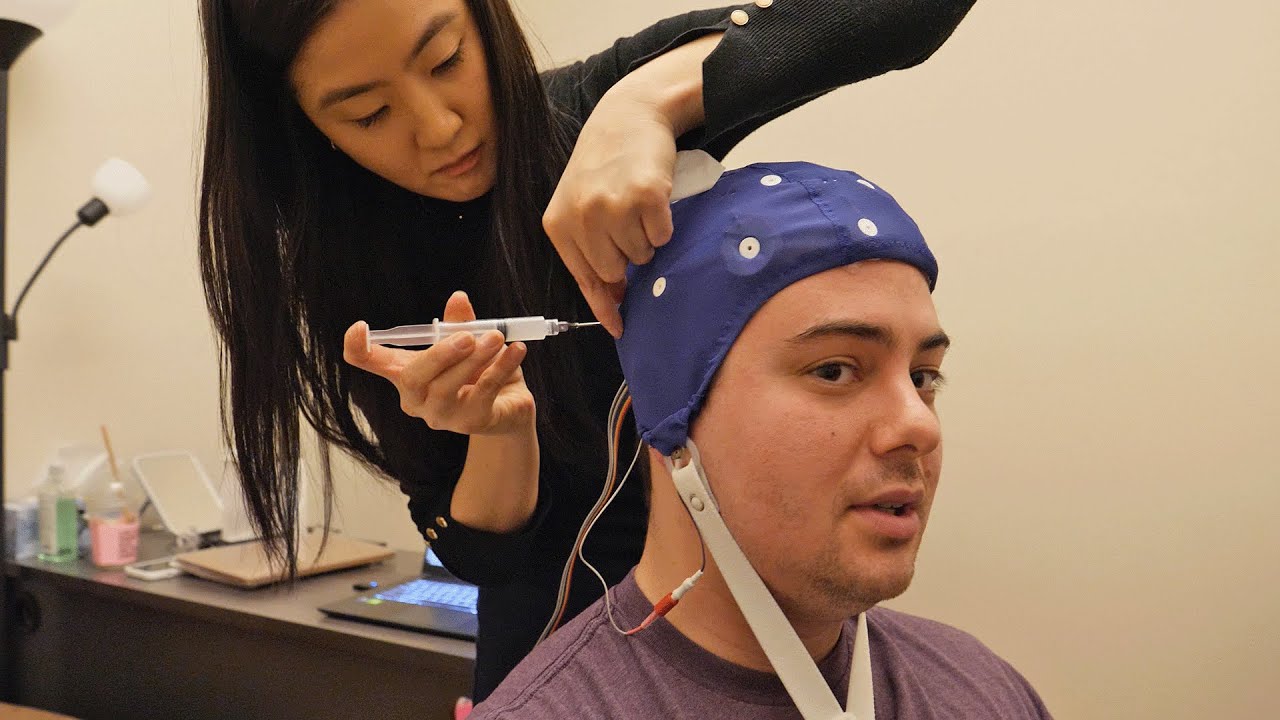
The other day I got an invitation to a windowless office building in downtown Manhattan to get a quantitative electroencephalogram, which is designed to measure brain wave patterns as electrical signals. It is being increasingly used to analyze various aspects of brain function, including things like cognitive flexibility, intelligence, and even creativity. Then I’ll be jumping on a call with the neuroscientist Andrew Hill, who has a Ph.D. in Cognitive Neuroscience from UCLA. He analyzed my brain and the results honestly shocked me. You can learn more about his company Peak Brain Institute here: https://peakbraininstitute.com/ 0:00 Intro 0:31 I take an “IQ” test? 0:54 I get the brain scan! 2:37 Scientists read my brain waves 3:09 Interview with neuroscientist Dr. Andrew Hill 3:27 Response control test results 5:11 Attention test results 5:35 My conclusions re: my “intelligence” or lack thereof 5:45 Does my brain processes languages differently? 7:18 My brain scan results 8:25 Is my brain OCD? 8:47 Why am I so tired all the time? 9:08 Looking at my brain connectivity 10:33 My brain is really sensitive 11:13 How fast my brain is 11:52 Am I getting enough sleep? 12:23 Is my brain gifted? 13:07 My conclusions re: my brain scan results 13:20 Concluding thoughts LEARN A FOREIGN LANGUAGE WITH MY METHOD! ✉️ Join my newsletter and discover how I pick up new languages quickly (and learn how you can do the same): 👉🏼 https://www.streetsmartlanguages.com/signup 📚 Check out my Street-Smart Language courses: 👉🏼 https://www.streetsmartlanguages.com Subscribe to my channel: https://www.youtube.com/channel/UCLNoXf8gq6vhwsrYp-l0J-Q?sub_confirmation=1 Follow me on Instagram: https://www.instagram.com/xiaomanyc/ Follow me on Facebook: https://www.facebook.com/xiaomanyc/ If you guys like the music in my videos, you can check out all the AMAZING music Epidemic Sound has at my affiliate link here: http://share.epidemicsound.com/xiaomanyc

Make sure not to miss the great offers in Biohacker's summer sale! Check it out: https://biohackercenter.com/ QEEG or EEG Brain Mapping is an assessment tool used to generate hypotheses and identify likely performance bottlenecks in the brain. This presentation will give an overview of how QEEG can be used, the history and some limits on QEEG, and how to identify features in the brain that are most likely to improve performance when addressed. Dr. Andrew Hill is one of the top peak performance coaches in the world. He holds a PhD in Cognitive Neuroscience from UCLA’s department of Psychology and researches attention, cognitive performance, and peak aging. Dr. Hill is the founder of Peak Brain Institute, host of the Head First Podcast, Lead Neuroscientist at truBrain, and a UCLA Lecturer teaching courses in psychology, neuroscience, and gerontology. This presentation was filmed during Biohacker Summit Stockholm in May 2018. Check https://biohackersummit.com for upcoming events & tickets!
Get new articles and brain training insights by email.
No spam, unsubscribe anytime.
